Bioeconomy
Ireland’s farmers and rural communities are under real pressure to produce food sustainably while keeping their businesses going. Our university researchers are working alongside them to find practical solutions, from reducing reliance on chemical fertilisers to protecting crops from disease and making sure Ireland’s land is used in ways that are good for both nature and people.
How we’re helping:
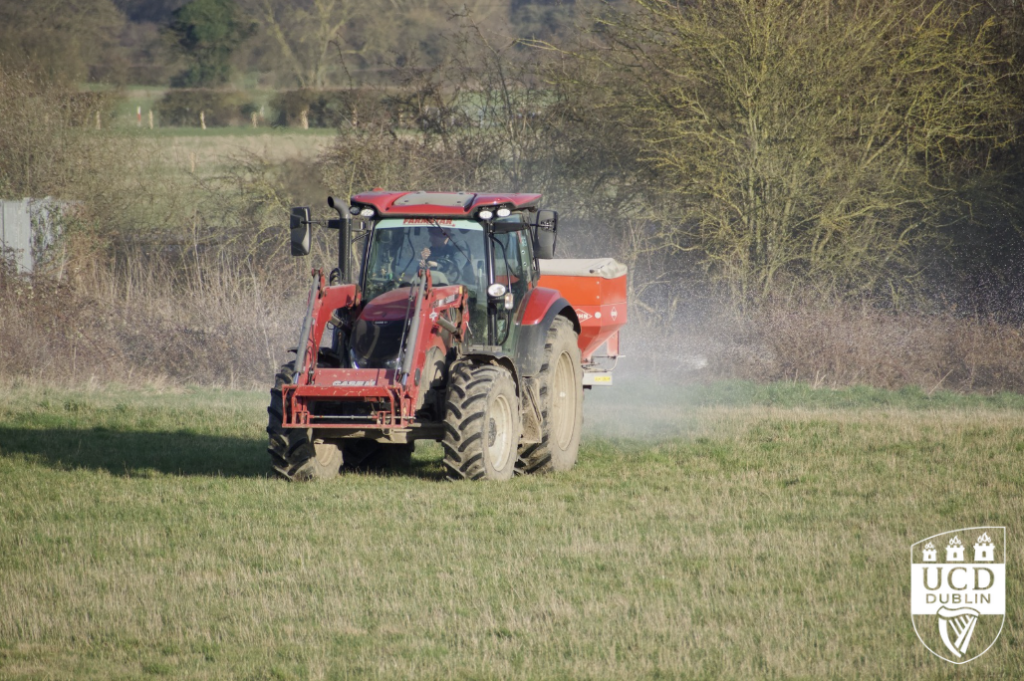
UCD are helping Ireland farm more sustainable crops
The Challenge: Ireland’s agricultural sector faces mounting pressure to reduce its environmental impact. Heavy reliance on chemical fertilisers is contributing to greenhouse gas emissions, and Ireland is obligated to cut these by 51% by 2050.
The Solution: Replacing chemical inputs with biological and plant-based alternatives, developing new crop varieties, and supporting rural communities to transition to more sustainable practices.
University Delivery: From UCD School of Biology and Environmental Science, Prof Fiona Doohan is using genomics, drone technology and biological alternatives to develop more sustainable crops. Associate Professor Carl Ng and Dr Joanna Kacprzyk, alongside PhD student Patrick Quille, have shown that a seaweed-based biostimulant can cut fertiliser use on farms by 20 to 25% with no drop in yield. UCD also supports skills development for the rural economy, including ecology and marine biology, so that communities are equipped to lead this transition.

TCD is helping Ireland grow its forests more sustainably.
The Challenge: Ireland is planting more trees to tackle climate change, but not all forests are equal. The wrong trees in the wrong places can do more harm than good for biodiversity, local communities and the environment.
The Solution: Finding out which trees work best, where they should go, and what the real trade-offs are, so that Ireland’s plans to expand its forests deliver for nature and communities.
University Delivery: Trinity’s FOREST project is examining what expanding Ireland’s forests with native species actually delivers for climate, biodiversity and local communities, ensuring Ireland’s afforestation targets are grounded in real evidence across multiple sites.
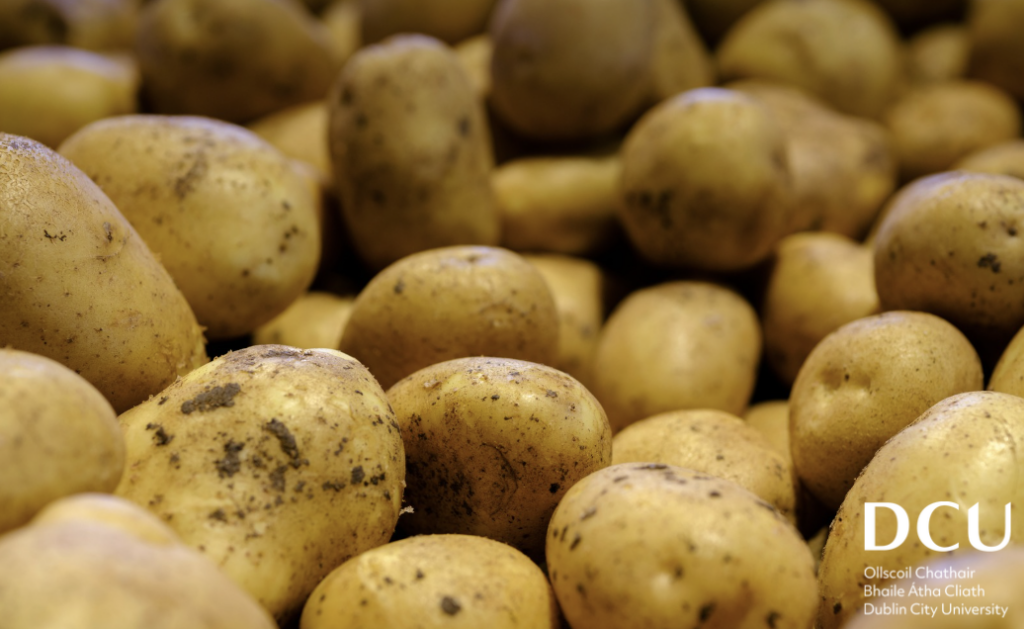
DCU are designing a covid-style test that will help Irish farmers tackle potato blight.
The Challenge: Potato blight costs Irish and European growers around €90 million every year. One of the biggest problems is that new resistant strains of blight are developing, meaning the chemical treatments farmers rely on are becoming less effective.
The Solution: A lateral flow test, like a Covid-19 antigen test, that can tell farmers which strain of blight they are dealing with in under an hour, so they can choose the most effective treatment before they spray.
University Delivery: Prof Anne Parle-McDermott, DCU School of Biotechnology, is developing DNA-based lateral flow tests that can detect resistant strains of potato blight in the field in under an hour. The research is part of the AGSENSE project, funded by Research Ireland’s Future Food Systems Challenge.
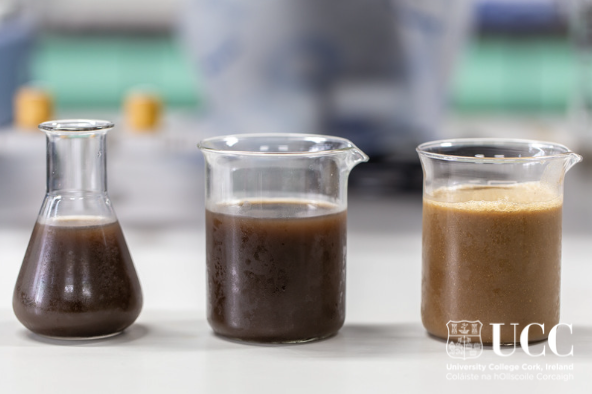
UCC is driving Ireland’s circular bioeconomy through sustainable fermentation
The Challenge: Ireland’s food and agricultural sector needs to find more sustainable ways to produce ingredients, chemicals and other products, moving away from processes that rely on fossil fuels and generating significant waste.
The Solution: Advanced fermentation and bioprocessing technologies that enable the production of sustainable food ingredients, chemicals and other bio-based products from biological sources.
University Delivery: UCC’s Centre for Sustainable Fermentation and Bioprocessing Systems for Food and the Bioeconomy brings together expertise in microbiology, food and nutritional sciences, and process and chemical engineering. Working with national and European bioeconomy partners, the centre is advancing precision fermentation and microbial biomanufacturing to support sustainable food production and the development of new bio-based products and industries.
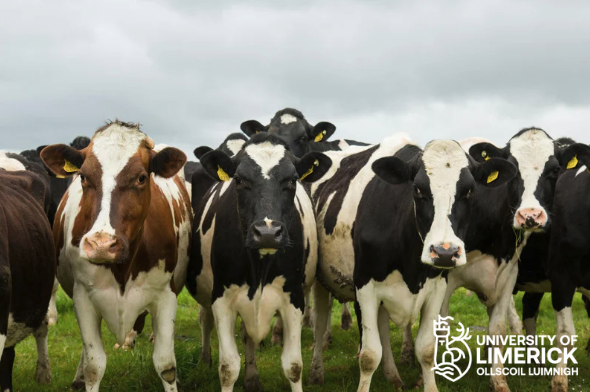
UL is supporting the dairy and beef sectors to increase sustainability.
The Challenge: Ireland’s farmers and rural communities are under real pressure to farm sustainably while keeping their businesses going.
The Solution: By unravelling the complex underlying biology of compromised fertility in individual bulls, a robust, flexible semen product can be delivered for artificial insemination with predictable and consistent fertility, giving the industry key tools to meet current emissions and animal welfare demands.
University Delivery: Professor Sean Fair, UL Department of Biological Sciences and Bernal Institute, is leading BullNet, an international multi-disciplinary research programme unravelling the biology of compromised fertility in individual bulls. Using cutting-edge basic, applied and machine-learning approaches, the project is delivering more consistent semen products for artificial insemination while advancing knowledge of how bull management and semen processing affect sperm characteristics, opening new applications in assisted reproduction.
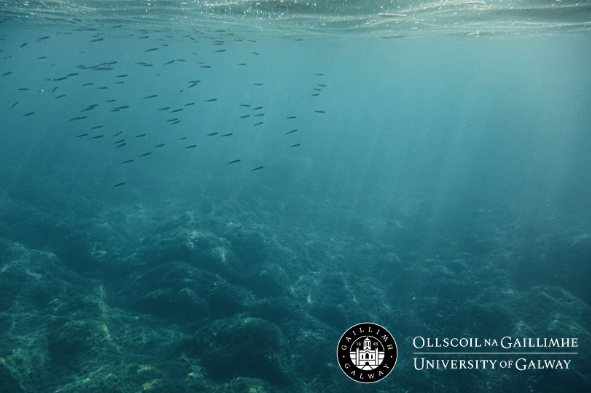
University of Galway is using software to protect Ireland’s marine environment.
The Challenge: Ireland has committed to protecting 30% of its marine environment by 2030, but with strong maritime industries such as fishing, and a need for offshore renewable energy, there is increasing pressure on marine space and actions that work for all stakeholders.
The Solution: Researchers can deploy mathematical algorithms to select areas that maximise conservation targets while also minimising the impacts on other stakeholders.
University Delivery: Through the MPA LIFE project, University of Galway is working with UCD, UCC and Government to significantly expand Ireland’s Marine Protected Areas. Professor Louise Allcock and Professor Mark Johnson, University of Galway School of Natural Sciences, are identifying potential marine conservation areas by using software which integrates spatial data for the distribution of biodiversity features, such as species and habitat, and the costs of conservation interventions.