Housing & Infrastructure
Ireland is facing one of the most serious housing crises in its history. Demand for homes far outstrips supply, construction costs are rising and thousands of people are without a place to call home. Our university researchers are working to change that, developing new construction methods, finding smarter ways to use existing materials and identifying practical solutions to bring empty buildings back into use.
How we’re supporting Government:
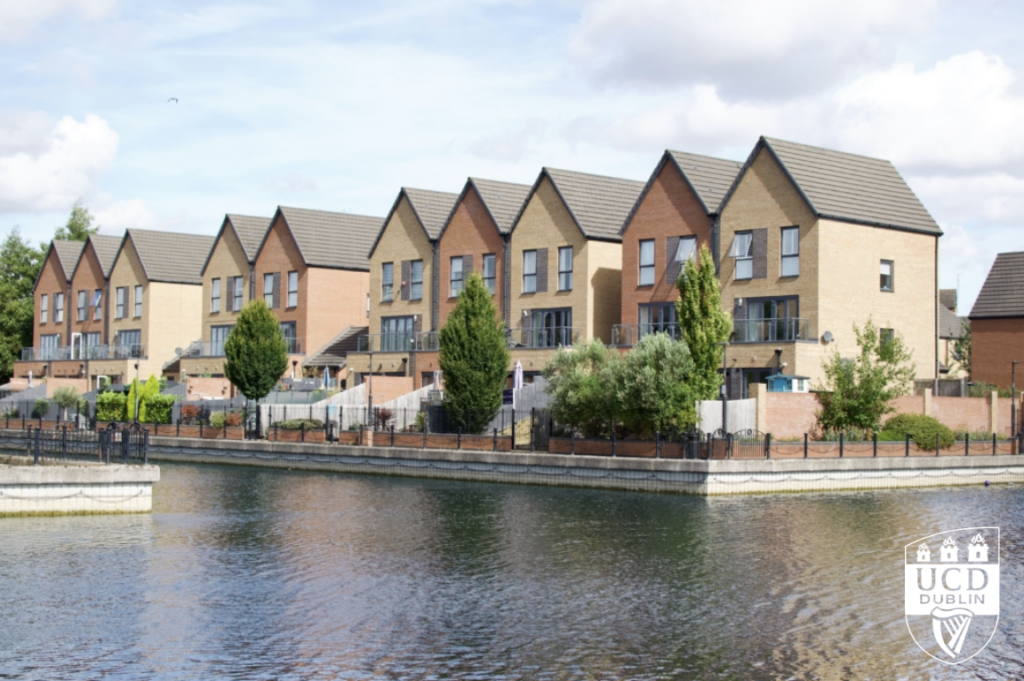
Through UCD research, homes are being built smarter, faster and greener.
The Challenge: As housing demand continues to rise, Ireland faces a critical challenge: conventional construction approaches are slow, labour-intensive and environmentally costly. Productivity in the sector has stagnated for decades, while Ireland’s ageing workforce intensifies pressures on an already strained system
The Solution: Modern Methods of Construction (MMC) offer a compelling alternative. By shifting building processes from site-based construction into factory-based manufacturing, MMC enables higher-quality, faster, and more sustainable construction. Yet until recently, Ireland lacked the scientific and technical evidence required to support widespread adoption of these systems.
University Delivery: Dr Daniel McCrum, UCD School of Civil Engineering, is filling this gap. Through comprehensive structural testing, computational modelling, stakeholder engagement and national policy collaboration, his research is providing the foundational knowledge needed to build homes safely and more sustainably using MMC. His work directly informs Housing for All, the Government’s housing action plan 2025-2030, as well as the Government’s MMC Action Plan and other national efforts to modernise Ireland’s construction sector.
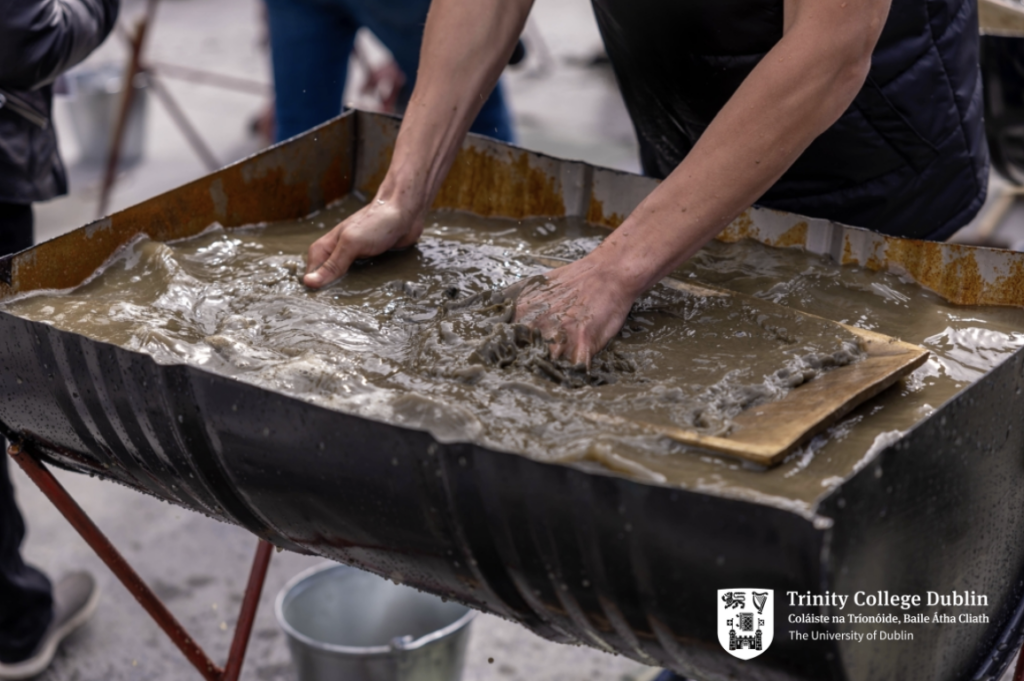
TCD are turning industrial waste into greener concrete
The Challenge: Ireland’s housing sector is under pressure to build more homes while reducing its environmental impact. In 2022, cement production was responsible for 5% of Ireland’s carbon emissions.
The Solution: Replacing traditional cement with biomass ash, an industrial waste product, to produce high-quality concrete that cuts carbon emissions by over 50%.
University Delivery: Prof Sara Pavia and Dr Zehao Lei, Trinity School of Engineering, have developed a way to turn biomass ash from Edenderry Power Station into high-performance, low-carbon concrete. In collaboration with FLI Precast Solutions, reducing carbon emissions by 51%.
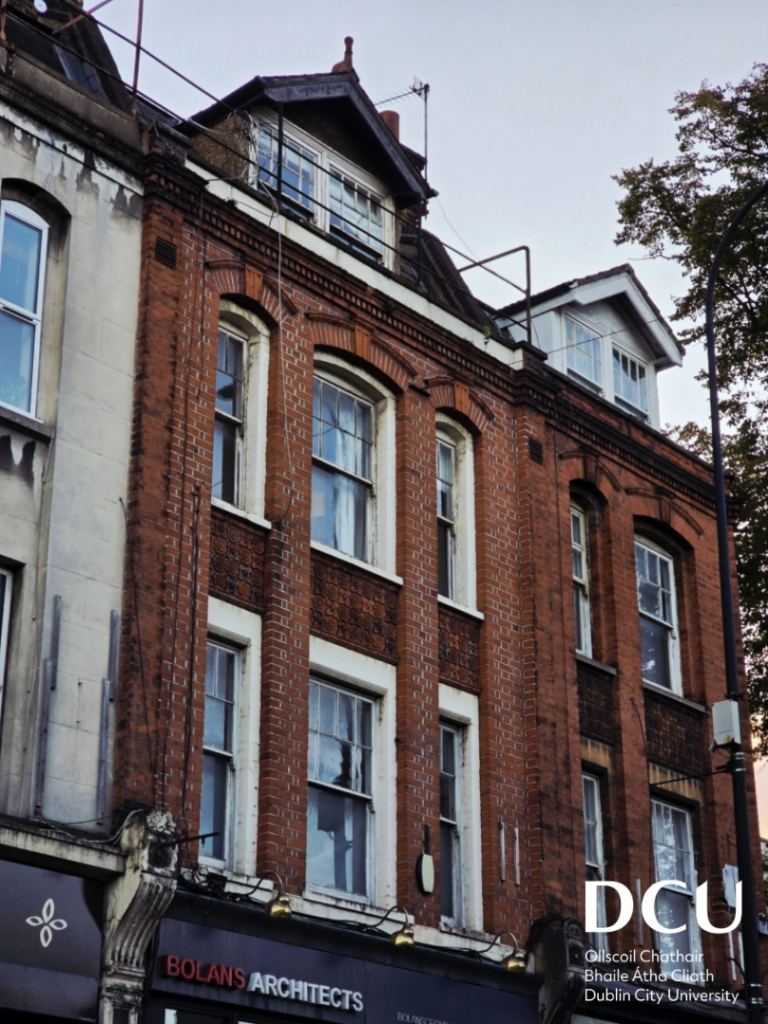
DCU is turning empty space above shops into homes.
The Challenge: There are over 13,000 homeless people in Ireland, yet vacant units above shops sit empty across towns and cities. These spaces have potential as housing but are complex and costly to convert.
The Solution: Identifying the practical, financial and policy changes needed to make converting vacant units above shops into social and affordable housing a real option.
University Delivery: Dr Kathleen Stokes, DCU School of History and Geography, worked with Dublin Simon Community to examine what it would take to turn vacant units above shops into homes. Funded by the Housing Agency, the research sets out practical recommendations for government and housing organisations to make it happen.
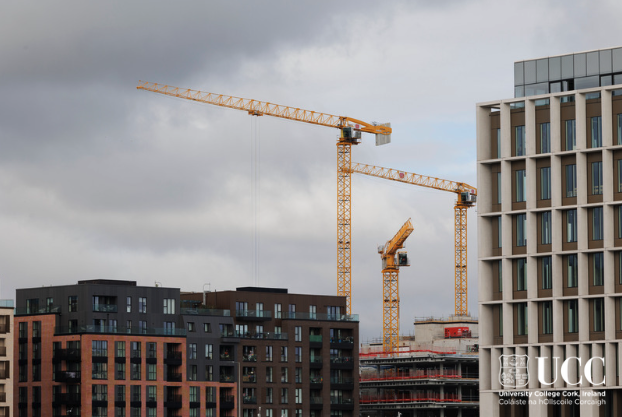
UCC is accelerating innovation in Ireland’s construction sector
The Challenge: Ireland needs to build more homes, but conventional construction methods are too slow, too costly and not sustainable enough to meet that demand.
The Solution:Through Construct Innovate, Professor Marguerite Nyhan and researchers at partner institutions are working with industry to develop new construction methods, digital technologies and sustainable building solutions that can improve productivity, reduce costs and support the delivery of high-quality homes.
University Delivery: At UCC’s School of Engineering and Architecture, Professor Marguerite Nyhan and colleagues are working to advance the science and technology underpinning sustainable, healthy and liveable cities of the future. Using large-scale datasets and advanced modelling techniques, their research is generating evidence that can support decision-making on urban planning, transport policy and climate action.
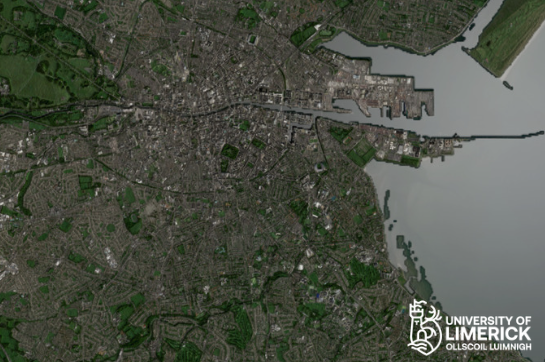
UL research is helping Ireland make smarter decisions on decarbonising homes and transport.
The Challenge: Ireland needs to decarbonise transport and buildings rapidly.
The Solution: Develop a validated, open-source national digital twin that integrates energy-demand data across transport, buildings and low-carbon heating to help policymakers, planners and utilities make better location-specific decisions on decarbonisation, emissions, social priorities and grid impacts.
University Delivery: Professor James O’Donnell and his team from the School of Engineering and UL’s Bernal Institute are creating a national digital twin that integrates energy-demand data for transport, buildings and low-carbon heating into one accessible decision-support platform. By equipping policymakers, planners and utility providers with location-specific insights on emissions, energy efficiency and grid impacts, the tool enables joined-up decarbonisation planning across Ireland.
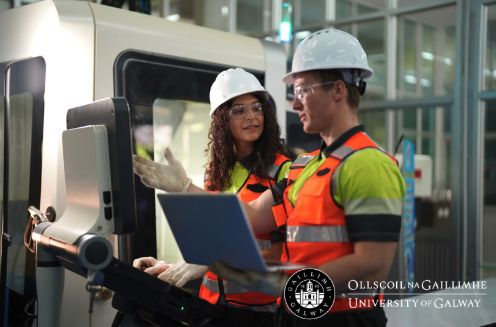
University of Galway is driving smarter, faster and greener construction across Ireland.
The Challenge: A generational transformation of infrastructure and housing delivery is required to meet the state’s climate action targets, the ambitions of the Government’s National Development Plan and the need for sustainable economic growth.
The Solution: Universities are ideally positioned to facilitate collaboration between industry, academia and government to shift the dial on productivity, sustainability and innovation. An industry-led and industry-facing network can be the catalyst to overcome challenges which hold back the construction industry, while driving efficiencies, greater productivity and greener home-building and infrastructure.
University Delivery: Construct Innovate, hosted by University of Galway, has fast become the platform for research, industry and government collaboration, bringing together 125 construction organisations to overcome barriers that constrain efficiency. By harnessing the research expertise at University of Galway, and across higher education, Construct Innovate is the trusted advisor with the knowledge needed to deliver national targets for housing and infrastructure.