Disability
Too many people with disabilities in Ireland still face barriers to education, healthcare and everyday life. Our university researchers are working to change that, from improving access to higher education to making sure healthcare services work for everyone, and ensuring that people with disabilities have a say in the research that affects them.
How we’re helping:

UCD are helping more people with disabilities access education, support and research.
The Challenge: People with disabilities in Ireland face significant barriers, from accessing higher education to finding reliable information about their condition. These gaps have real consequences for quality of life, employment and participation in society.
The Solution: Expanding access to higher education, developing digital tools that help people understand and manage their condition, and making sure people with disabilities have a real voice in the research that shapes their lives.
University Delivery: From UCD School of Psychology, Dr Jessica Bramham and Dr Christina Seery developed the Adult ADHD App in collaboration with ADHD Ireland and the HSE. Since its launch in 2022 it has had over 18,000 downloads and 12,000 active users. Professor Judith Harford, Dr Rachel Farrell and Amalia Fenwick, UCD School of Education, lead Power2Progress, a programme supporting students in DEIS schools in the Leinster region through tuition, mentoring and digital infrastructure. UCD also participates in the DARE scheme, supporting students with disabilities to access higher education.
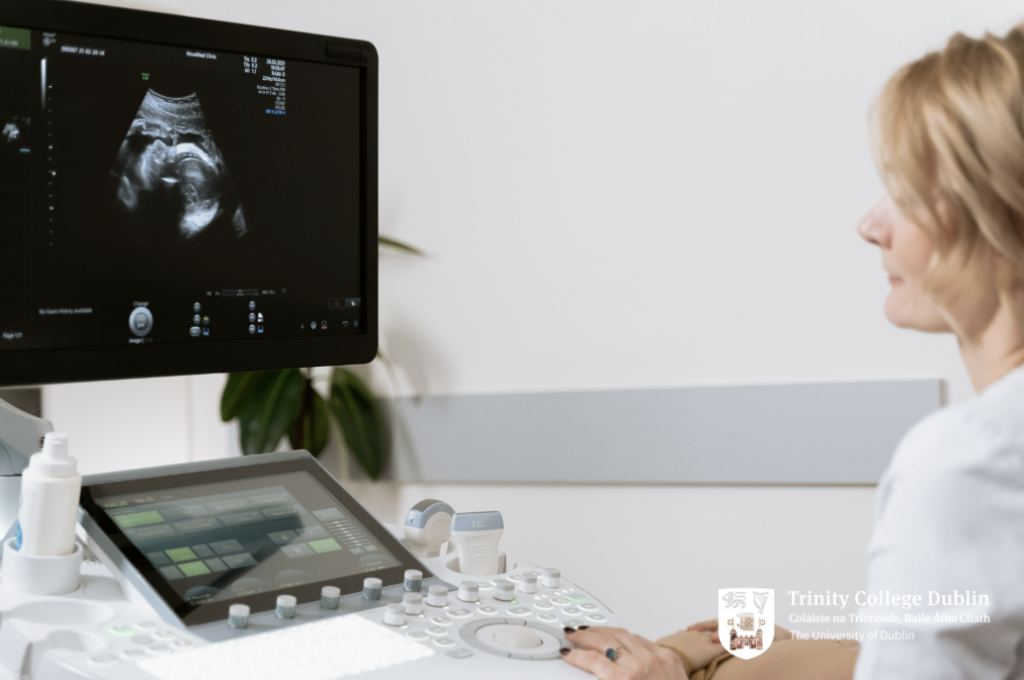
TCD are giving deaf women the maternity care they deserve.
The Challenge: Deaf women in Ireland have historically been underserved by maternity services, with little access to information or support in Irish Sign Language.
The Solution: Developing ISL-based resources that give deaf women access to the same maternity information and support as everyone else.
University Delivery: Prof Deirdre Daly, Trinity School of Nursing and Midwifery, and Prof Lorraine Leeson, Trinity Centre for Deaf Studies, interviewed fifteen deaf women about their experiences of maternity services in Ireland. Their findings were used to produce eight videos in Irish Sign Language, now part of a publicly available online course on women’s health after motherhood.

DCU became the world’s first autism-friendly university.
The Challenge: Ireland has one of the largest disability employment gaps in the EU. Young people with intellectual disabilities and autism leaving special schools have no dedicated career guidance or supported transition programmes, and most end up in day care services rather than further education or employment.
The Solution: A supported transition programme that gives young people with disabilities the guidance and support they need to move into mainstream further education, training and employment.
University Delivery: Dr Ger Scanlon, DCU Institute of Education, has spent a decade researching the WALK PEER programme, which has supported 275 students across Ireland to transition from special school into mainstream further education, training and employment. Nearly 30% of participants progressed to mainstream pathways, with stronger results in more recent years. DCU is also the world’s first designated autism-friendly university, adapting its campus and supports to make university life fully accessible for autistic students and staff.

UL research is reshaping how mental health crises are managed across Ireland.
The Challenge: Adapt mental health crisis response across Ireland.
The Solution: Providing front-line practitioners with real learnings and perspectives.
University Delivery: Research led by Professor Owen Doody, School of Nursing and Midwifery, has found compelling evidence that the Community Access Support Team (CAST) pilot project, a groundbreaking initiative between An Garda Síochána and HSE Mid West Mental Health Services, is reshaping how individuals experiencing mental health crisis are managed at the interface of health and policing. CAST is transforming mental health crisis response through partnership, compassion and clinical expertise.

University of Galway is working to protect people with disabilities from exploitation and abuse.
The Challenge: People with disabilities in Ireland face multiple challenges in their daily lives, including targeted exploitation and abuse. One issue, commonly referred to as “mate crime”, is where individuals are befriended and manipulated for the purposes of exploitation, coercion, abuse or criminal activity.
The Solution: By partnering with disabled people, their advocacy and support networks and the Policing and Community Safety Authority, researchers can examine the issue, highlight first-hand experiences, the need for better awareness and safeguarding and more access to justice.
University Delivery: At University of Galway’s School of Law, Dr Charles O’Mahony and research assistant Fiona McNulty carried out a national research project, funded by Research Ireland in partnership with the Policing and Community Safety Authority, identifying significant underreporting of the exploitation and the lack of formal recognition or a specific criminal offence of mate crime.